01 / GENETIC VARIATION
How do individuals differ genetically?
Generate sequence information around individual microbes to study genomic diversity within a population.
X1000 · SINGLE-MICROBE RESEARCH
Microfluidic partitioning, reactions and barcode association create a workflow for single-microbe genomic research, adding an individual-level view of population heterogeneity.
Ask about X1000 studies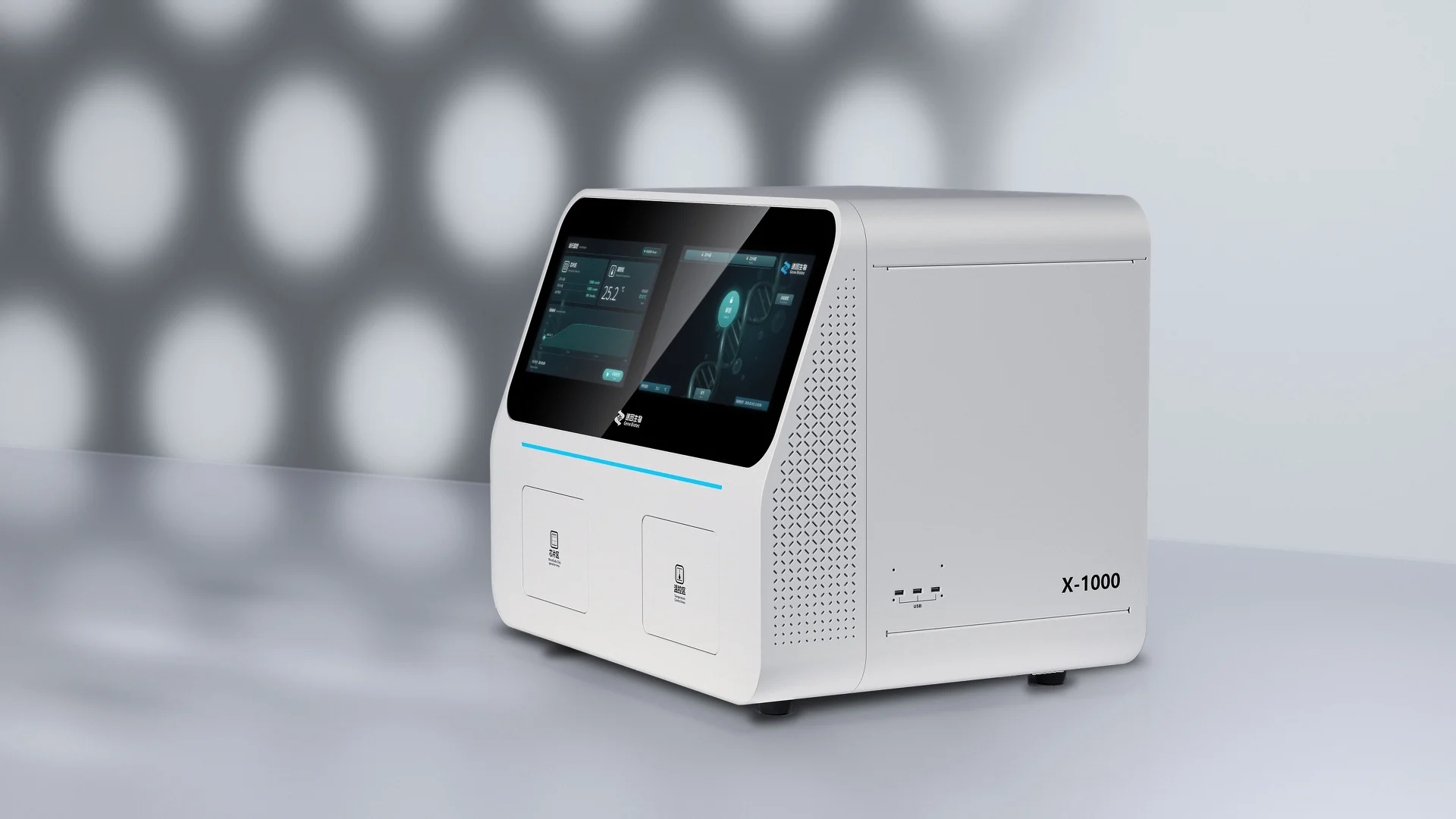
RESEARCH QUESTIONS
01 / GENETIC VARIATION
Generate sequence information around individual microbes to study genomic diversity within a population.
02 / SEQUENCE ASSIGNMENT
Use partition and barcode information to investigate sequence origin and association.
03 / FUNCTIONAL LEADS
Use genomic differences to inform hypotheses for functional research and test them in independent experiments.
HOW IT WORKS
Microfluidic droplets provide space for sample partitioning and independent reactions. Compatible lysis, amplification and barcoding steps link sequence data to its source partition, and quality control then assesses genomic information at the individual level.
Design suspension preparation and partitioning around the target organisms and sample conditions.
Assess organism compatibility with steps such as lysis and genome amplification.
Combine barcodes, quality control and analytical methods to investigate sequence-to-individual associations.
Occupancy control, multiplet detection and amplification QC select reliable single-organism data.
WORKFLOW
Assess the sample matrix and target organisms, then prepare a suitable suspension.
Perform the relevant droplet processing, lysis and genome-amplification steps.
Connect fragmentation, barcode association and library preparation.
After external sequencing, interpret the data alongside quality control, coverage and analytical methods.
SYSTEM & ASSAY
Organize the experiment around microfluidic partitioning and the relevant reaction stages.
Assess processing and amplification for the organisms of interest, recognizing that different biological targets require different treatment.
Consider usable sequence, coverage and origin assignment, with their limitations interpreted in the context of the study.
Every X1000 includes the RVQC® Real-Time Visual Quality Control System, which uses real-time visual recognition to monitor key droplet states.
START A STUDY
A discussion can begin with three things: where the sample comes from, which organisms are of interest and what question you want to answer. These guide assessment of sample processing, assay compatibility and analysis scope.
Individual microbes and communitiesDesigned for single-microbe research such as bacteria; viral particles and infected host cells can be assessed per project.
Assess microbial project feasibilityFeedback, suggestions or concerns: CEO Direct