01 / CELL COMPOSITION
Which cell populations are present?
Use expression features and reference information to study population composition and relative differences.
R100 · SINGLE-CELL RNA & CHROMATIN RESEARCH
Start with single-cell transcriptomic information to study composition, expression and state in tissues or cell populations. Select an RNA or chromatin workflow around the question at hand.
Ask about R100 workflows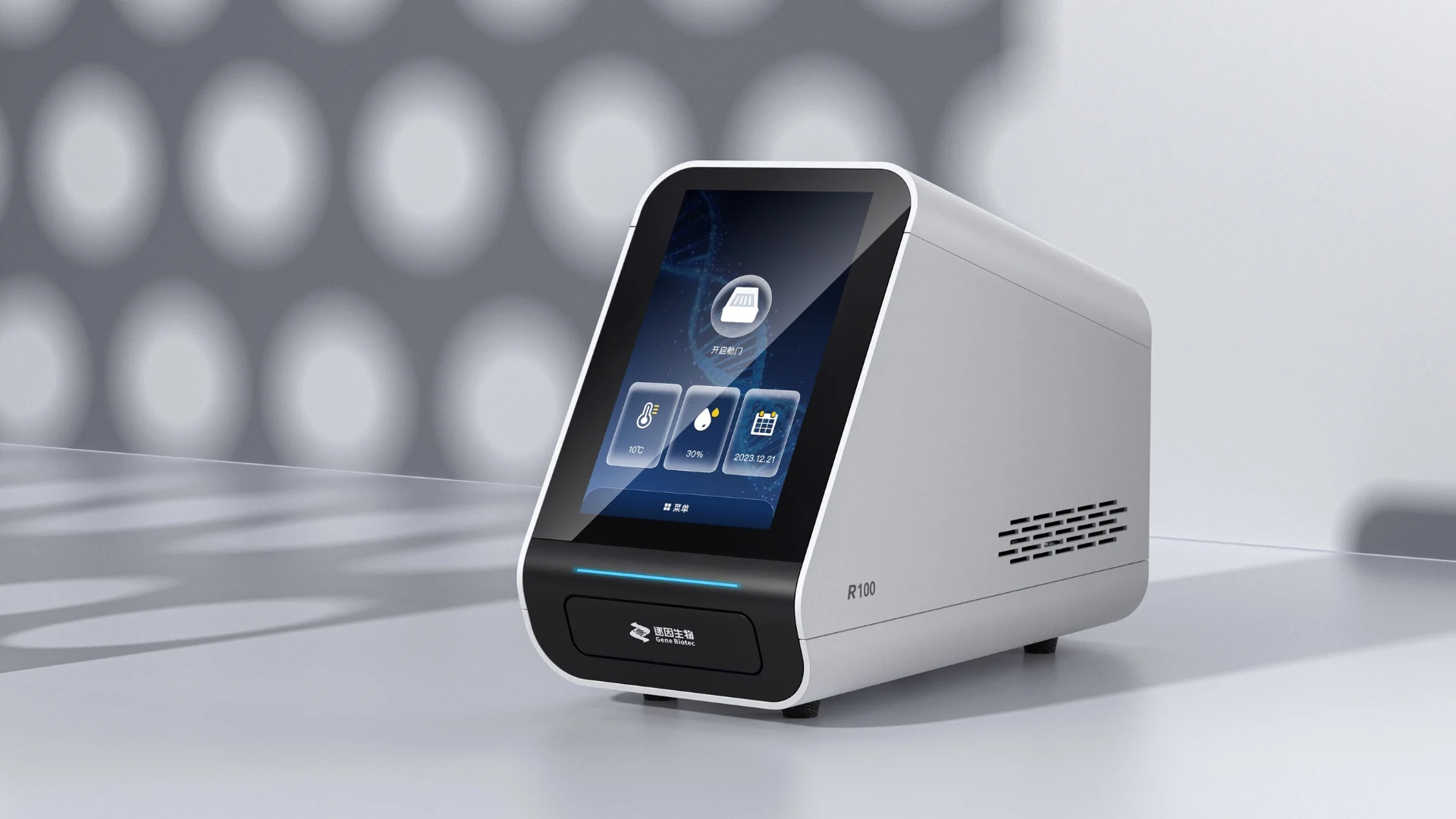
RESEARCH QUESTIONS
01 / CELL COMPOSITION
Use expression features and reference information to study population composition and relative differences.
02 / EXPRESSION STATE
Compare cellular states and associated molecular signals across conditions within the limits of the study design.
03 / CHROMATIN ACCESSIBILITY
Select an appropriate workflow, such as ATAC, to investigate chromatin accessibility.
SINGLE-CELL TRANSCRIPTOMIC PRINCIPLE
Microfluidic droplets, barcoded beads and assay reactions carry cellular-origin and molecular-label information into library preparation and downstream analysis.
In the relevant transcriptomic workflow, Poly(dT) captures transcripts with poly(A) tails.
Retain cellular-origin information for downstream read assignment.
Use molecular labels to help identify amplification duplicates and support molecular counting.
This section describes the transcriptomic workflow; ATAC uses a different experimental and analytical process.
FROM SAMPLE TO DATA
Define the study groups and suitable preparation method, then prepare the required single-cell suspension.
Combine the instrument, capture components and barcoded beads for cell partitioning and assay reactions.
Use the reverse-transcription, library-preparation and index components to prepare transcriptomic libraries.
After external sequencing, perform quality control, expression-data processing and the agreed research analyses.
SYSTEM COMPONENTS
Cell-capture components and barcoded beads connect partitioning, capture and cellular labeling.
Reverse-transcription reagents transfer captured transcript information into the library workflow.
Library-preparation reagents and index components support the relevant libraries and sample identification.
Works with fresh cells, dissociated tissue and nuclei; special sample types and species can be assessed up front.
CHOOSE THE READOUT
Discuss workflows for 3′ gene expression or project-specific targeted RNA studies.
Explore RNA servicesInvestigate accessibility through a defined assay such as ATAC to add a view of cellular regulatory state.
Explore ATAC servicesRNA + ATAC, 5′ gene expression and TCR/BCR-related workflows are under optimization. Project needs and assessment pathways can be discussed.
View project statusRNA and ATAC are separate workflows, measured independently.
Feedback, suggestions or concerns: CEO Direct
Explore cell state, immune and regulatory research